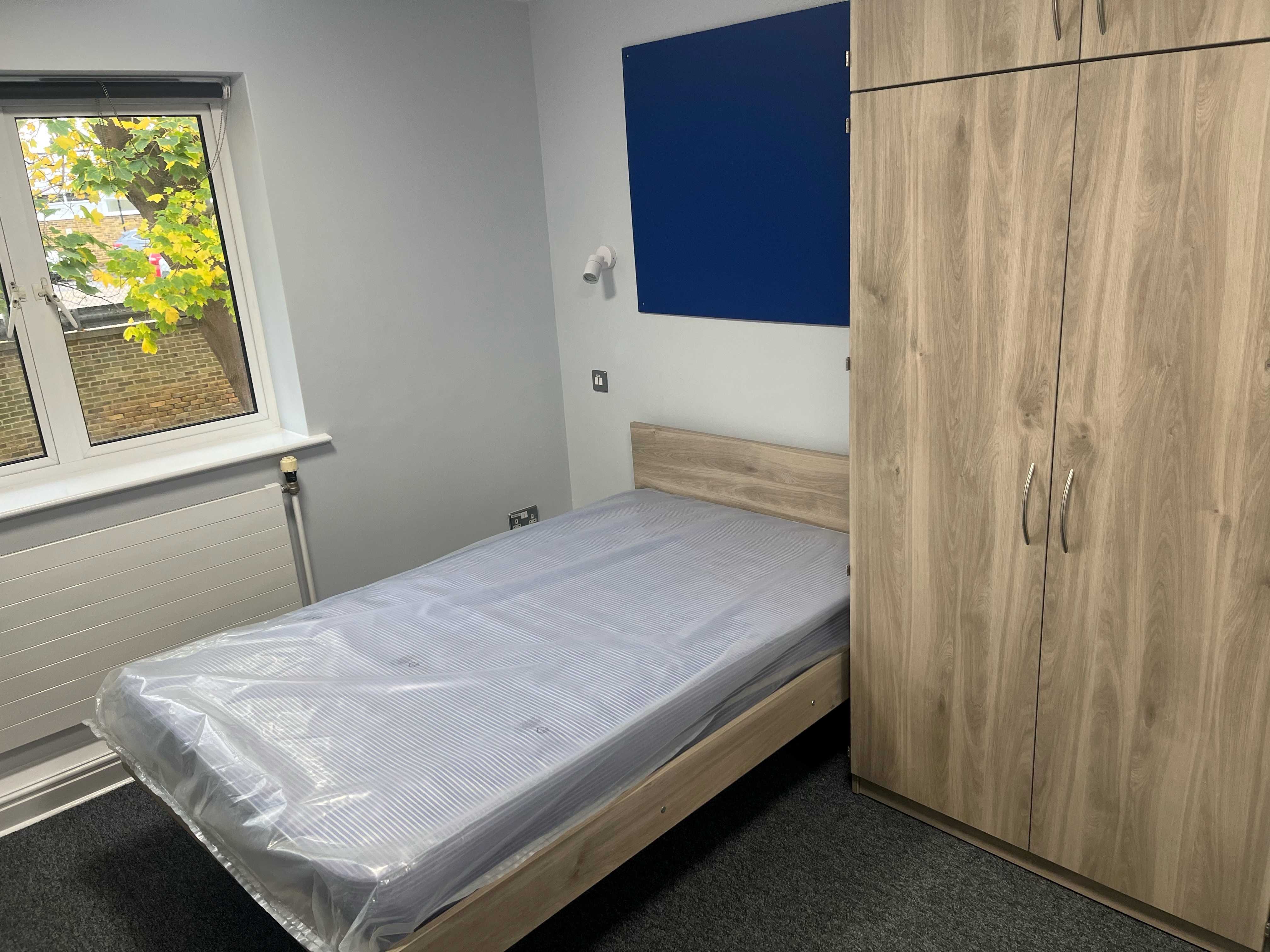
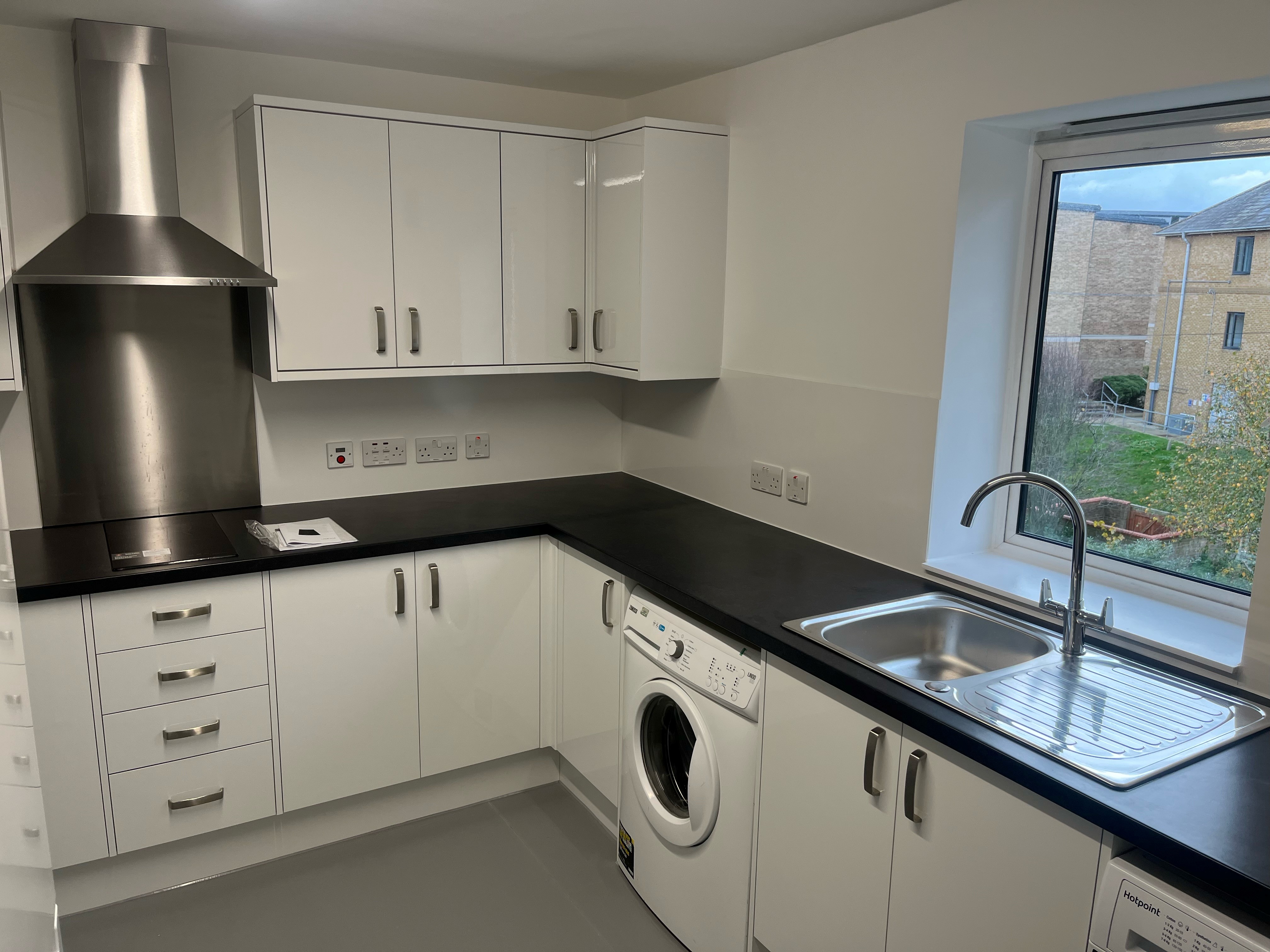
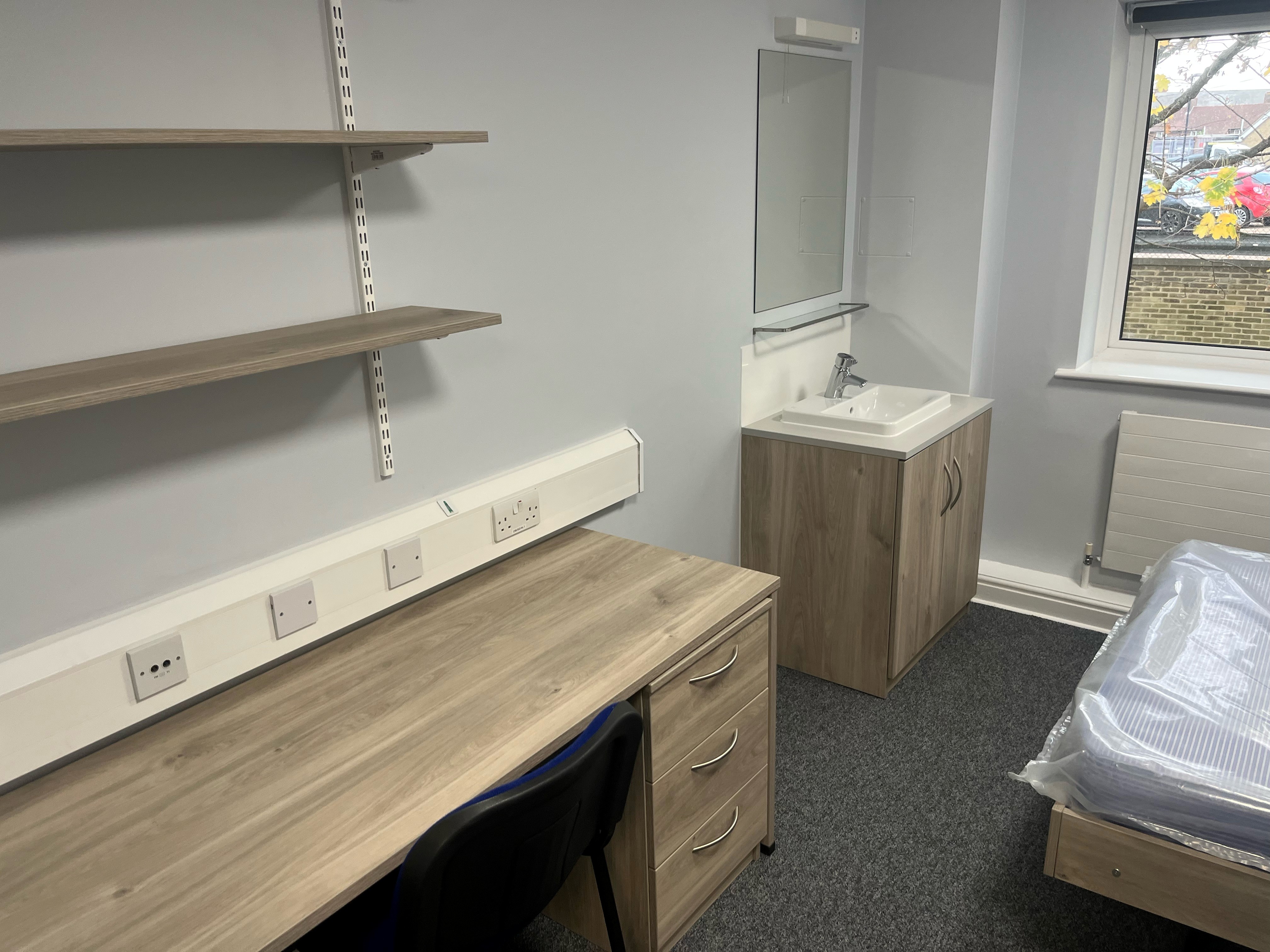
We were selected to deliver the refurbishment of the Burgoyne and Napier Blocks at Brompton Barracks, delivering a comprehensive upgrade of two key accommodation buildings within a live military environment. The project required careful coordination, attention to detail, and strict adherence to security and quality standards. Our goal was to modernise the spaces, improve performance across all building systems, and provide a comfortable, durable, and compliant environment for future occupants.
Project Scope
The works encompassed a full internal refurbishment, beginning with a complete soft strip-out. We removed existing furniture, flooring, kitchens, sanitaryware, and wall and floor tiles to prepare the blocks for a full renovation.
On the mechanical side, we installed a new ventilation system throughout drying rooms, ablutions, bathrooms, and cleaning cupboards. We fitted new showers, toilets, baths, and basins, and carried out remedial works to an existing flue to resolve a latent defect. The project also included the chlorination of the water system and the removal of redundant water tanks from the roof voids to improve efficiency and safety.
Our electrical works included a complete lighting upgrade, with new layouts in all kitchen areas and the installation of new distribution boards in risers (12 in total) and plant rooms (2). This work required carefully coordinated shutdowns to minimise disruption and maintain operational safety.
We also installed Whiterock wall cladding to all ablutions and wet areas, laid new vinyl and carpet flooring throughout, and supplied and fitted new furniture to 72 rooms. In addition, we installed 12 new kitchens, 12 IPS units, 6 baths, and 6 cleaners’ cupboards, creating a fresh, modern, and compliant living environment.
During the works, we discovered that none of the existing firestopping met current standards. We rectified this by carrying out full, compliant fire-stopping works across both blocks. Finally, we completed window and external door remedial works, ensuring the buildings were fully secure and weather-tight.
Key Challenges
This project presented several challenges that required adaptability and strong communication. Last-minute variations were introduced late in the programme, affecting sequencing and closeout activities. We managed these efficiently by re-prioritising critical path tasks and maintaining open dialogue with the client team.
Working within a secure military base also demanded meticulous planning. Every contractor, visitor, and delivery had to be pre-approved and security-cleared, which extended lead times and limited flexibility. Despite these constraints, we kept the project on track through early coordination and disciplined logistical planning.
Summary
The refurbishment of the Burgoyne and Napier Blocks demonstrated our ability to deliver complex works in a secure and challenging environment. We completed a high-quality refurbishment that modernised essential military accommodation, leaving the client with upgraded, compliant, and efficient facilities ready for long-term use.
Related Projects
Type:
Defence
Value:
£1.9m
Client:
Babcock International Group / HOLDFAST Training Services Limited
CGA is delivering the comprehensive repair and renewal of the roof at the Grade II* listed Officer's Mess at Brompton Barracks — our second project for Babcock and HOLDFAST at the Royal School of Military Engineering. The complex heritage roofing scope is being delivered around a live, fully operational building, including a 59-tonne crane lift planned with Plate Load Testing and GPR surveys.